
Around 22 months, many toddlers start to experience night fears. Their imaginations are blossoming, and suddenly, shadows might look like monsters, or familiar sounds take on a spooky quality. It’s a completely normal developmental stage, but it can be exhausting for everyone involved. The good news is there are gentle ways to help your little one feel safe and secure through the night.
Common Signs Your Toddler Has Night Fears

It’s not always obvious what’s bothering a tiny person who can’t fully articulate their worries. But you might notice some changes in their nighttime behavior:

- Waking up crying or calling out more frequently during the night.
- Resisting bedtime, even after a consistent routine.
- Clinging to you at night or wanting extra cuddles.
- Talking about “monsters” or “bad dreams” (even if their understanding is limited).
- Pointing to shadows or objects in their room with apprehension.
- General fussiness or anxiety around bedtime.
Tiny Habits That Bring Comfort
Small, consistent actions can make a big difference in helping your toddler feel safe when the lights go out.

Stick to a Predictable Bedtime Routine
Consistency is key. A calm, predictable sequence of events—like a warm bath, quiet play, a story, and a lullaby—signals to their brain that it’s time to wind down. This routine provides a sense of security and control.
Acknowledge Their Feelings
Even if their fear seems irrational to you, it’s very real to them. Say something like, “I see you’re scared of the shadows. It’s okay to feel that way. Mommy/Daddy is here to keep you safe.” Validating their emotions helps them feel understood.
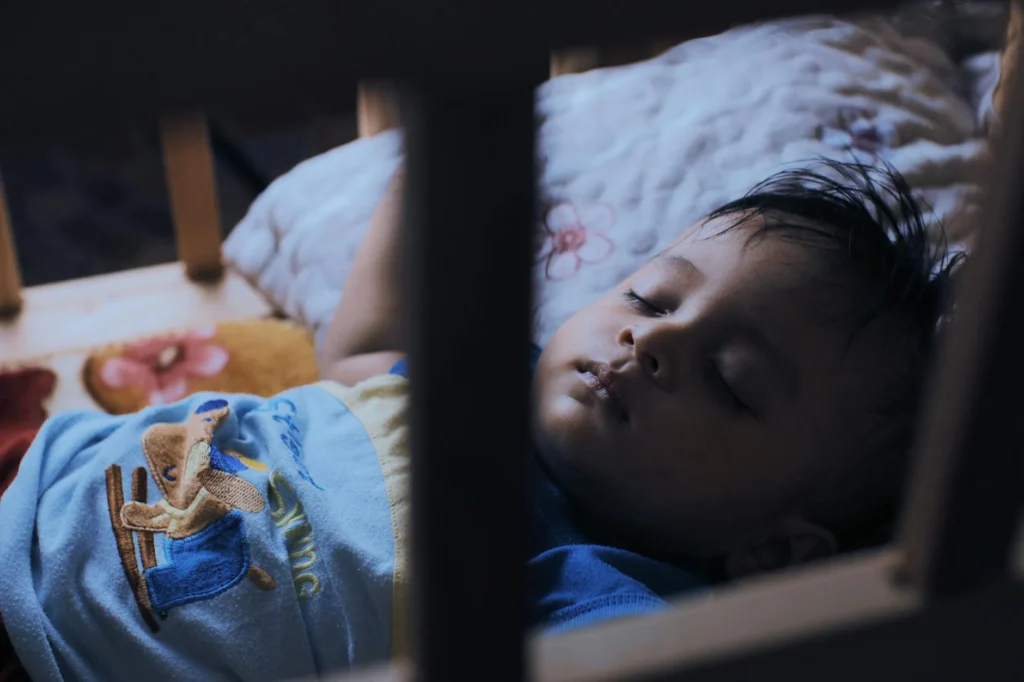
Nightlight Magic
A soft, dim nightlight can chase away scary shadows and provide a sense of comfort. Choose one that gives just enough light to see familiar objects without being too bright to disrupt sleep.
Monster Spray & Room Checks
This simple trick can be surprisingly effective. Fill a spray bottle with water and label it “Monster Spray.” Before bed, let your toddler “spray” away any monsters in their room. You can also do a quick “check” of the closet or under the bed together to show them everything is safe.
Offer a Comfort Item
A special teddy bear, blanket, or other lovey can be a powerful source of comfort and security when you’re not right there. Make sure it’s safe for their age and sleep environment.
Be Present, Then Retreat
If they wake up scared, go to them quickly. Offer calm reassurance, a hug, and gently tuck them back in. Avoid immediately bringing them into your bed if you don’t want to establish that as a new routine. Reassure them you’re close by, then leave, waiting a moment outside their door to ensure they settle.
Common Missteps to Avoid
- Dismissing their fears: Saying “There’s nothing to be scared of!” can make them feel unheard and alone with their feelings.
- Getting frustrated: It’s hard when sleep is disrupted, but frustration can heighten their anxiety. Take a deep breath.
- Introducing scary media: Even seemingly innocuous cartoons can be too intense for some toddlers and fuel their fears. Keep media gentle and age-appropriate.
- Making a big deal out of the “monsters”: While acknowledging, don’t over-dramatize or act fearful yourself. Your calm confidence is key.
When to Connect with a Healthcare Professional
Most night fears are a passing phase, but sometimes they can be a sign of something more. Consider reaching out to your pediatrician if:
- Your child’s night fears are severe, persistent, and seem to be getting worse.
- Their sleep disruptions are causing significant distress for your child or the entire family.
- You notice other concerning behavioral changes during the day.
- The fears are leading to significant developmental regression.
Disclaimer: This article provides general information and is not a substitute for professional medical advice. Always consult with a qualified healthcare provider for any health concerns or before making any decisions related to your child’s health and well-being.
Note: Totals vary by provider, region, and part quality.
Images sourced from Pexels.