
Your 29-Week-Old and Water: What You Need to Know

As your baby reaches 29 weeks old, they’re likely exploring new developmental milestones, perhaps even sitting up with support or reaching for objects. This age, roughly 6.5 to 7 months, is also when many families begin introducing solid foods. With solids comes a common question: should my baby drink water?
Understanding your baby’s hydration needs is important. Their tiny bodies process things differently than adults, and what seems like a simple drink can have a big impact. We’ll explore when water is appropriate, how much to offer, and what to look for to ensure your little one stays properly hydrated.
Please remember, the information provided here is for general knowledge and informational purposes only, and does not constitute medical advice. Always consult with a qualified healthcare professional for any health concerns or before making any decisions related to your child’s health and well-being.
When Do Babies Need Water?
The First Six Months
For babies under six months of age, breast milk or infant formula provides all the hydration and nutrients they need. Their kidneys are still developing, and giving water can actually be harmful.
- Water can fill up a baby’s stomach, reducing their intake of crucial breast milk or formula, which are packed with vital nutrients.
- Too much water can dilute the sodium levels in a baby’s body, potentially leading to a serious condition called water intoxication, which can cause seizures or coma.
In hot weather, instead of water, offer more frequent breastfeeds or formula bottles to keep younger babies hydrated.
Around Six Months and Beyond
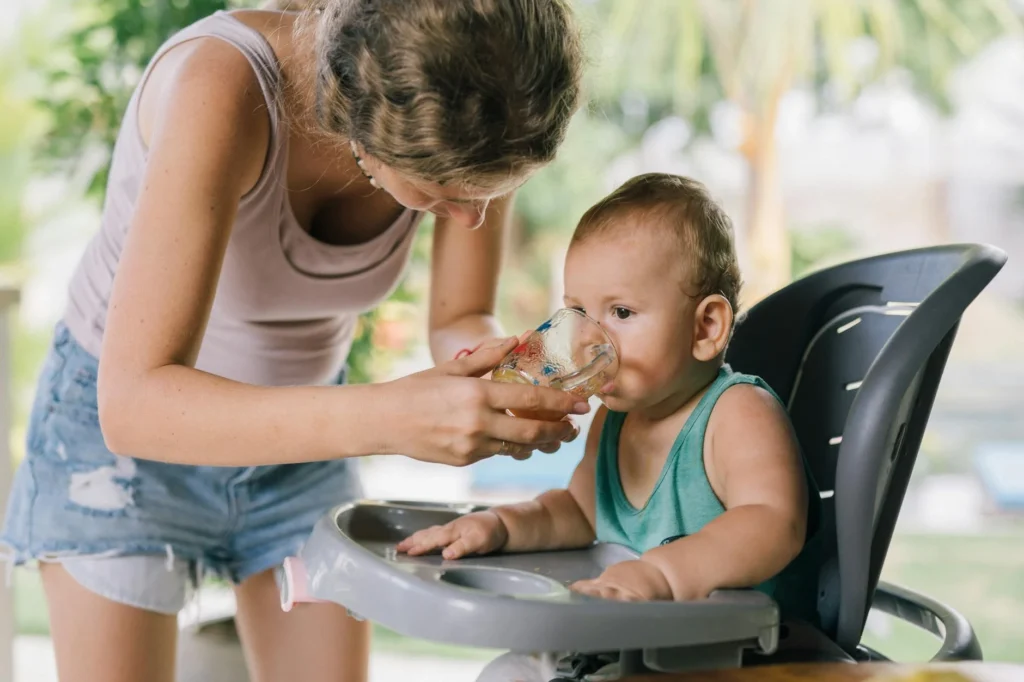
When you start introducing solid foods, typically around six months, you can begin to offer small sips of plain water. This isn’t about hydration as much as it is about helping them learn to drink from a cup and wash down solid food.
Even at this stage, breast milk or formula remains the primary source of hydration and nutrition for your baby. Water is just a supplemental drink offered alongside meals.
How Much Water is Okay?
For Babies (6-12 Months)
Once your baby is around six months old and has started solids, you can offer a few sips of water with their meals. We’re talking about very small amounts – perhaps 2-4 ounces total over the course of a day, offered in an open cup or a straw cup. The goal isn’t to have them gulp down a full glass, but to introduce the concept and help them with new tastes and textures of food.
Remember, this water should never replace their milk feeds. Those milk feeds are still essential for their growth and development.
For Toddlers (12+ Months)
Once your child passes their first birthday and is eating a wider variety of solid foods, their water intake can gradually increase. They’ll still be getting hydration from milk (whole cow’s milk, if introduced, or breast milk), but water becomes an increasingly important part of their daily fluid intake. Always prioritize plain water over sugary drinks like juice.
Signs of Good Hydration and When to Be Concerned
Good Hydration in Babies
You can often tell if your baby is well-hydrated by observing a few key signs:
- Wet Diapers: For babies under a year, at least 6-8 wet diapers in 24 hours is a good indicator.
- Moist Mouth: Their mouth and tongue should look moist, not dry or sticky.
- Alertness: They should be generally alert, active, and happy.
- Soft Spot: The soft spot on their head (fontanelle) should appear flat.
Signs of Dehydration (When to Contact a Professional)
Dehydration can be serious for babies and young children. Contact your healthcare professional immediately if you notice any of these signs:
- Fewer wet diapers than usual (e.g., less than 6 in 24 hours for babies).
- Dry mouth or tongue.
- Lack of tears when crying.
- Sunken soft spot on their head.
- Sunken eyes.
- Lethargy, unusual drowsiness, or extreme fussiness.
- Cool and dry skin.
Practical Tips for Offering Water
- Use an Open Cup or Straw Cup: Introducing an open cup or straw cup early can help with oral motor development. Avoid bottles for water, as they are often associated with milk feeds.
- Plain Water Only: Offer plain, filtered water. Do not add sugar, flavorings, or fruit. Juices are generally not recommended for babies, especially under one year, due to their high sugar content.
- With Meals: Offer water alongside solid meals, rather than between milk feeds.
- Patience is Key: Your baby is learning! Don’t worry if they don’t drink much at first. Keep offering small amounts.
- Important Safety Note: Never give honey to a baby under one year of age due to the risk of infant botulism. Also, avoid adding salt or sugar to your baby’s food or drinks. When introducing new solid foods, offer them one at a time to easily identify any potential allergies.

Frequently Asked Questions
Q: Can I give my baby juice instead of water?
A: It’s generally best to avoid juice for babies, especially under one year. Even diluted juice contains natural sugars that can contribute to tooth decay and provide unnecessary calories without much nutritional benefit. Plain water is always the better choice when offering a drink other than milk.
Q: What if my 29-week-old baby refuses water?
A: Don’t worry! If your baby is under six months, they don’t need water. If they are older and have started solids but aren’t keen on water, remember that breast milk or formula is still their primary source of hydration. Keep offering small sips with meals, but don’t force it. Many babies take time to get used to new tastes and textures.
Q: Do babies need water in hot weather?
A: For babies under six months, increased breast milk or formula feeds are usually sufficient to keep them hydrated in hot weather. For older babies (6+ months), you can offer more frequent small sips of water in addition to their regular milk feeds. Always prioritize milk for hydration in infants.
Images sourced from Pexels.