
What changes now?

Around 32 weeks, your little one is likely becoming more active and curious about the world around them. Many babies at this stage are developing stronger core muscles, which means they’re getting pretty good at sitting up unsupported for short periods. This improved stability is a big milestone, not just for play, but also for starting a new adventure: mealtime in a high chair!
As your baby grows, their world expands. They’re more alert and engaged, ready to explore new textures and tastes. Moving into a high chair isn’t just about feeding; it’s about joining family mealtimes and further developing their independence and fine motor skills.
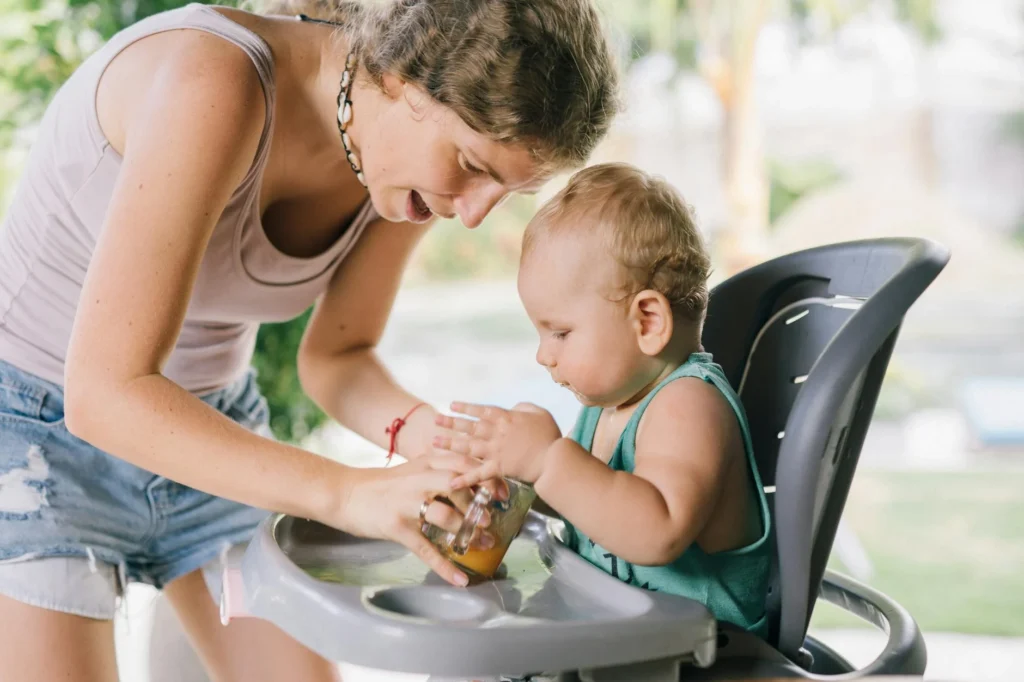
Feeding: High Chair Posture Basics
Bringing your baby to the family table in a high chair is an exciting step! But it’s not just about what they eat, it’s also about how they sit. Proper posture in the high chair is crucial for safe and comfortable mealtimes.
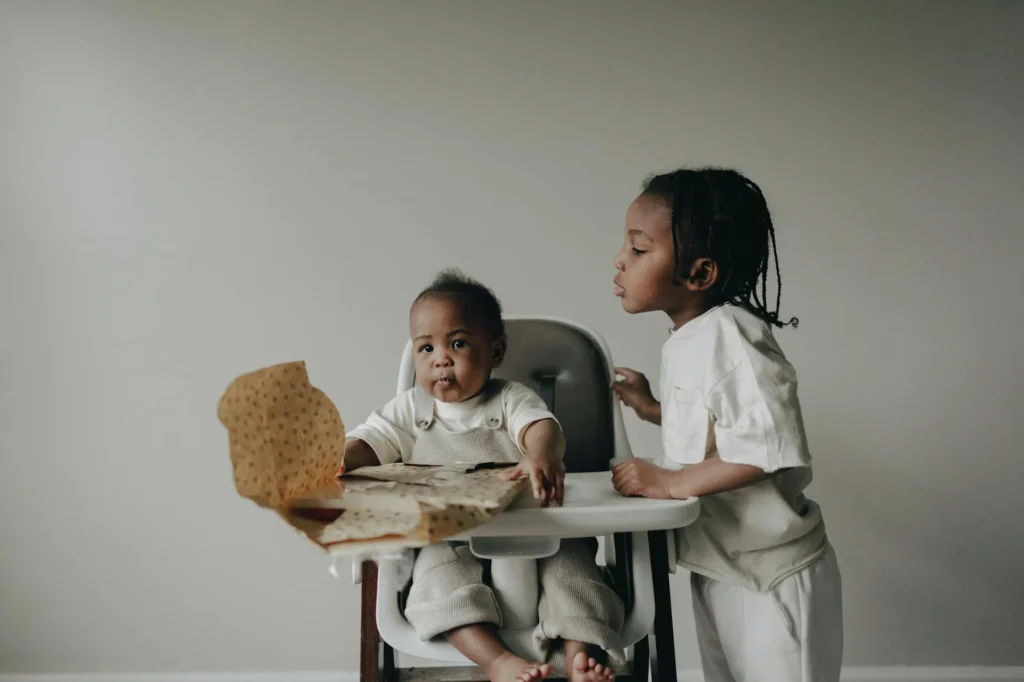
When is your baby ready for the high chair?
Before introducing the high chair, ensure your baby shows these signs of readiness:
- They can sit up independently with good head control.
- They show interest in food, perhaps leaning forward and opening their mouth when you eat.
- They have lost the tongue-thrust reflex, meaning they don’t automatically push solids out of their mouth.
Why is good posture so important?
An upright, supported posture helps reduce choking risks and allows your baby to focus on eating. It also aids digestion and makes the experience more comfortable for them.
Achieving optimal high chair posture:
- Upright Back: Your baby should be sitting straight, not slumping to the side or forward. If there’s too much space around them, you can use rolled-up towels or blankets on either side for temporary support until they grow into the chair, ensuring it doesn’t restrict their movement.
- Hips and Knees at 90 Degrees: Aim for their hips to be back in the seat pocket with their knees bent at roughly a 90-degree angle, forming a nice L-shape.
- Feet Supported: This is often overlooked but incredibly important! Your baby’s feet should be firmly resting on a footrest, not dangling. Foot support provides stability for their core and helps them feel secure and grounded. Think about how uncomfortable you’d be eating with your feet dangling! If your high chair doesn’t have an adjustable footrest, you can improvise with a sturdy box, books, or a rolled towel to give them that crucial support.
- Table/Tray Distance: The high chair tray should be close enough so your baby can comfortably reach their food without having to lean too far forward. Their elbows should be able to rest on the tray while eating.
Mealtime Safety Notes:
- Always supervise your baby during meals. Never leave them unattended in a high chair.
- Use the high chair’s safety straps to keep your baby secure.
- Ensure the high chair is stable and on a flat surface.
- **No honey for babies under one year old** due to the risk of infant botulism.
- Avoid adding salt or sugar to your baby’s food, especially under one year. Their kidneys aren’t fully developed to handle excess salt, and sugar can lead to unhealthy eating habits.
- When introducing new foods, offer them one at a time and wait a few days before introducing another new food. This helps you identify any potential allergic reactions. Watch for signs like hives, swelling, difficulty breathing, or severe vomiting and seek immediate medical attention if these occur.
Please remember, this information is for general guidance only and is not a substitute for professional medical advice. Always consult with your pediatrician or a healthcare professional regarding your baby’s specific health, development, or any concerns you may have.
Play & Development
Beyond feeding, your 32-week-old is constantly learning through play. They’re likely reaching for objects with better precision, transferring toys from hand to hand, and perhaps even practicing their pincer grasp (picking up small items with thumb and forefinger). These skills are all fantastic preparation for self-feeding as they get older!
Practical Tips for Happy Mealtimes
- Make it Fun: Mealtimes should be positive experiences. Let your baby explore their food, even if it gets a little messy.
- Follow Cues: Pay attention to your baby’s hunger and fullness cues. Don’t force them to eat if they’re not interested, and don’t rush them if they’re enjoying their meal.
- Model Good Habits: Eat with your baby whenever possible. They learn by watching you.
- Clean Up: Keep a damp cloth handy for quick clean-ups after meals. Many high chair trays are dishwasher-safe for easy cleaning.
When to talk to a professional
If you notice your baby consistently struggles to sit upright, has poor head control, shows discomfort in the high chair, or has difficulty with feeding that concerns you, it’s always a good idea to chat with your pediatrician or a pediatric physical therapist. They can offer tailored advice and support.
Frequently Asked Questions
Q: What if my baby’s feet don’t reach the high chair footrest?
A: Foot support is key! If your high chair doesn’t adjust, you can create a temporary footrest using a sturdy stack of books, a small box, or a tightly rolled towel secured under their feet. The goal is to provide a stable surface for them to push against.
Q: How long should my baby stay in the high chair for meals?
A: Follow your baby’s lead. As long as they are engaged and happy, they can stay. Once they start to get squirmy, throw food, or show signs of wanting to get out, it’s usually a sign that mealtime is over. Aim for focused, enjoyable periods rather than long, drawn-out sessions.
Q: My baby keeps slumping in their high chair. What can I do?
A: First, ensure their feet are supported. Then, check if they’re properly positioned all the way back in the seat. If there’s too much room around their sides, you can use rolled-up towels or small blankets to provide temporary side support, helping them maintain an upright posture. If slumping persists, consult your pediatrician.
Note: Totals vary by provider, region, and part quality.
Images sourced from Pexels.