
Your baby is growing and becoming more alert with each passing week! At 15 weeks old, they’re likely observing the world with keen interest, reaching for objects, and maybe even starting to roll. Awake time is precious, offering wonderful opportunities for connection, learning, and playful exploration. You don’t need fancy toys or elaborate setups – often, the simplest interactions are the most meaningful.
Play & Development at 15 Weeks
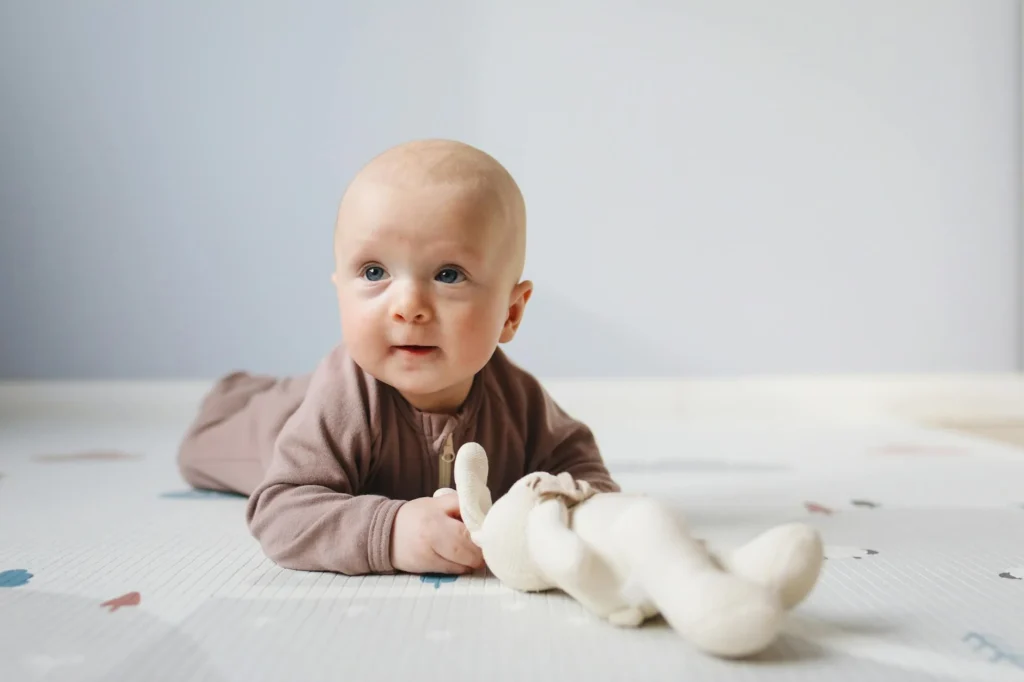
Around 3.5 months, babies are honing their visual tracking skills, enjoying tummy time more, and responding to sounds and faces. They’re developing a sense of cause and effect, and everything is new and exciting! Here are some gentle, engaging play ideas to enjoy with your little one:
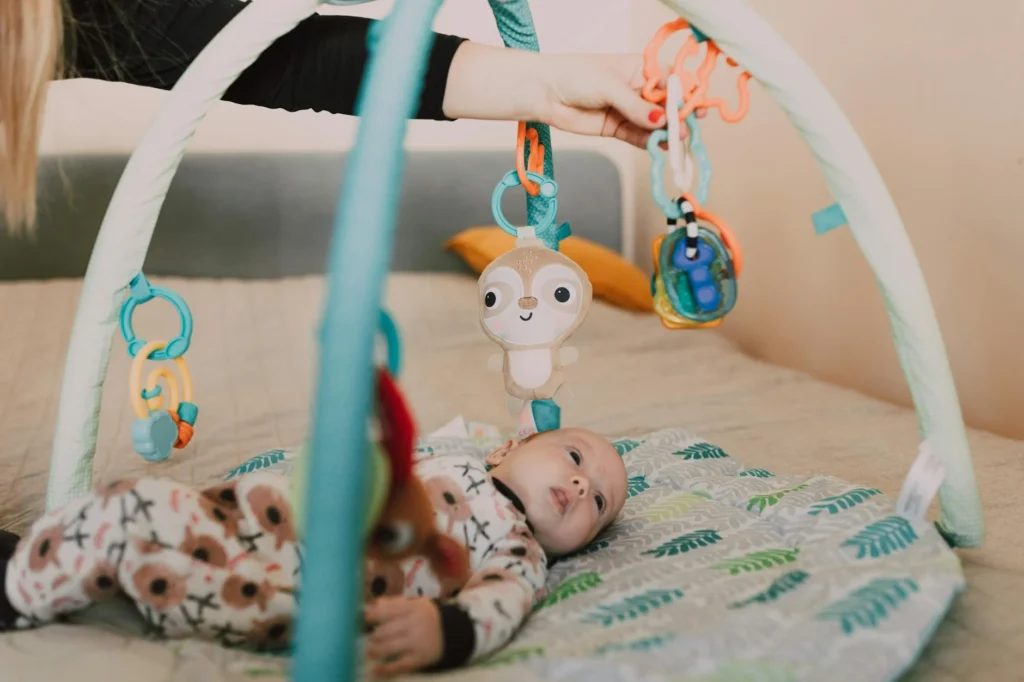
1. Engaging Tummy Time
Tummy time is crucial for strengthening neck and core muscles. Make it fun by placing interesting, high-contrast toys just out of reach, or lie down facing your baby and make silly faces. A soft blanket on the floor with different textures can also be stimulating. Keep sessions short and frequent throughout the day.

2. Mirror, Mirror on the Wall
Babies love looking at faces, and their own is no exception! Hold a baby-safe mirror (shatterproof, soft-edged) in front of your little one. Watch them coo, smile, and bat at their reflection. Talk about what you see: “Who’s that happy baby?” “Look at your eyes!”
3. Story Time & Songs
It’s never too early to start reading. Choose board books with bright colors and simple images. Even if your baby doesn’t understand the words, they’ll love hearing your voice, seeing the pictures, and feeling your closeness. Sing simple nursery rhymes or make up your own songs. Vary your tone and expressions.
4. Sensory Exploration
Introduce different safe textures. A soft silk scarf, a crinkly fabric toy, or a gentle rattle can provide wonderful sensory input. Let your baby grasp, feel, and explore with their hands and mouth (as they inevitably will!). Always supervise closely to ensure safety and prevent any choking hazards.
5. Gentle Movement & Stretches
Help your baby explore their body. Gently bicycle their legs, stretch their arms overhead, or bring their hands to their feet. This helps with body awareness and flexibility. Talk about what you’re doing, like “Up goes your arm!” or “Kick, kick, kick!”
6. Outdoor Adventures (Sensory Strolls)
Even a short walk around the block in a stroller or carrier can be a rich sensory experience. Point out trees, leaves, birds, and the sky. The fresh air and changing scenery are stimulating and can be wonderfully calming for both of you.
Making the Most of Awake Time
Remember, your baby’s attention span is short. Follow their cues! If they turn away, fuss, or seem overstimulated, it’s time for a break or a change of activity. Connection is key.
Watch for Hunger & Tired Cues
A happy, well-rested, and well-fed baby will be more engaged in play. Keep an eye out for signs of hunger (rooting, fussing) or tiredness (yawning, rubbing eyes, zoning out) and respond promptly. Sometimes, the best play is just quiet cuddles.
Be Present and Responsive
Your baby learns by watching and interacting with you. Make eye contact, smile back when they smile, and respond to their coos and babbles. These back-and-forth interactions build important communication skills and strengthen your bond.
Disclaimer: This information is for general guidance only and is not a substitute for professional medical advice. Always consult with your pediatrician or another qualified healthcare provider for any questions or concerns about your baby’s health and development.
Frequently Asked Questions
Q: How long should my 15-week-old be awake at a time?
A: Most 15-week-olds can comfortably stay awake for 1.5 to 2 hours between naps. Watch for tired cues to ensure they don’t get overtired.
Q: What if my baby doesn’t like tummy time?
A: Many babies fuss during tummy time. Try doing it in short bursts, placing them on your chest, lap, or using a rolled-up towel under their arms. Make it playful with toys and your interaction. Consistency is more important than duration.
Q: Do I need special toys for a 15-week-old?
A: Not at all! Simple objects like soft scarves, rattles, board books, and baby-safe mirrors are often more engaging than complex toys. Your voice and face are their favorite playthings!
Note: Totals vary by provider, region, and part quality.
Images sourced from Pexels.