
Bathtime Bliss: Post-Bath Skincare Essentials

Bathtime can be a wonderfully soothing and fun part of your 47-week-old’s day. But once the splashing stops and the towel comes out, a little attention to their skin can make a big difference. Their delicate skin needs gentle care to stay soft, hydrated, and protected, especially as they’re exploring more and encountering new environments.
What’s Happening with Their Skin Around 47 Weeks?
As your little one approaches their first birthday, their skin is still quite different from an adult’s. It’s thinner, more permeable, and has a less developed barrier, making it more susceptible to dryness, irritation, and environmental factors. They might be crawling, touching more surfaces, and possibly trying new foods, all of which can impact their skin. Maintaining a consistent, gentle skincare routine helps support this developing barrier.

After-Bath Skincare Basics for Your Little One
Pat, Don’t Rub
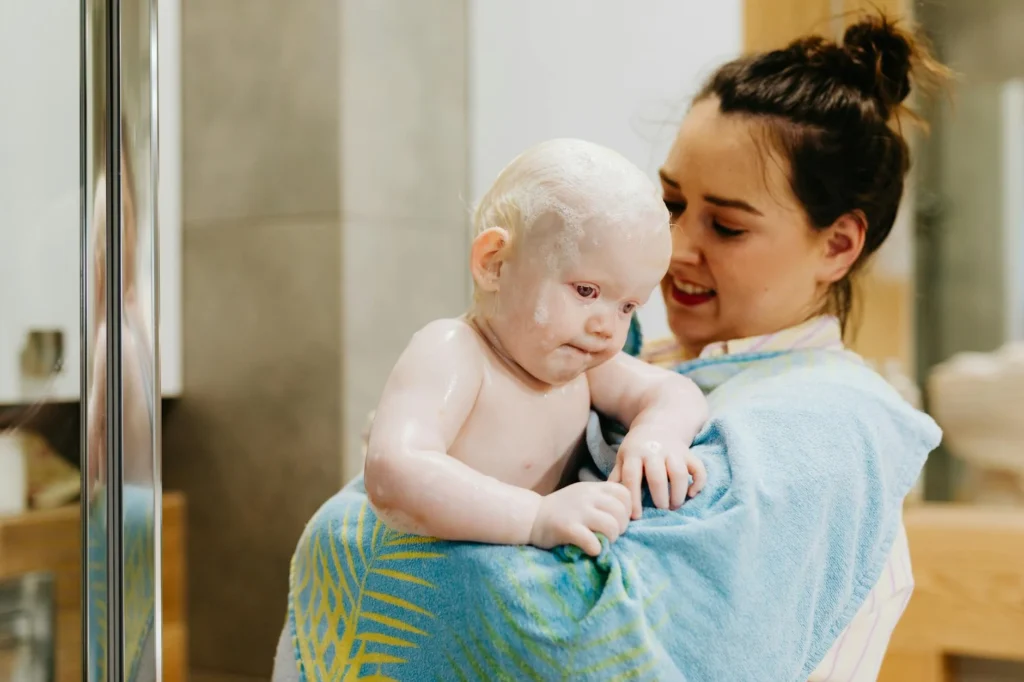
After a warm bath, gently pat your baby’s skin dry with a soft towel. Rubbing can irritate their delicate skin and strip away essential moisture. Pay extra attention to skin folds, like the neck, armpits, and diaper area, to prevent dampness that can lead to irritation.
Moisturize, Moisturize, Moisturize
This is perhaps the most crucial step. Within a few minutes of drying – while their skin is still slightly damp – apply a gentle, fragrance-free moisturizer. This helps to lock in the moisture from the bath, keeping their skin soft and supple. Look for lotions or creams specifically designed for babies, as these are formulated to be extra mild.
Choosing Products Wisely
When selecting skincare products for your baby, look for options that are:
- Fragrance-free: Artificial fragrances can be irritating to sensitive skin.
- Hypoallergenic: Minimizes the risk of allergic reactions.
- Dermatologist-tested: Often indicates they’ve been vetted for sensitive skin.
Avoid products with harsh chemicals or dyes. When trying a new product, consider doing a small patch test on a tiny area of their skin first to ensure there’s no adverse reaction.
Diaper Area Care
After drying and moisturizing the rest of their body, address the diaper area. If your baby is prone to diaper rash, a thin layer of barrier cream or ointment can provide extra protection against moisture and irritants.
Common Baby Skin Concerns and When to Act
It’s common for babies to experience minor skin issues like dry patches, mild redness, or a little bit of flaky skin, especially during changes in weather. Regular moisturizing often helps with these minor concerns.
However, if you notice:
- Persistent rashes that don’t improve with gentle care
- Skin that is very red, inflamed, or weeping
- Signs of discomfort, itching, or pain
- Any unusual bumps, blisters, or changes in skin color
Please contact a healthcare professional. These could be signs of something needing a closer look.
Practical Tips for a Smooth Routine
- Make it a routine: Incorporate skincare into their regular post-bath or bedtime routine. Consistency helps.
- Keep it fun: Use this time for gentle massage and bonding. Sing a song or talk softly to your baby.
- Warm environment: Ensure the room is warm enough so your baby isn’t cold during the process.
Disclaimer: This information is for general guidance only and is not a substitute for professional medical advice. Always consult with a pediatrician or healthcare provider for any health concerns or before making any decisions related to your baby’s care.

Frequently Asked Questions
How often should I bathe my 47-week-old baby?
Most 47-week-old babies don’t need a full bath every day. Two to three times a week is often sufficient to keep them clean, especially if you’re doing daily ‘top and tail’ washes (face, hands, diaper area). However, if your baby gets particularly messy during playtime or meals, more frequent baths are fine, as long as you use gentle products and follow up with moisturizing.
Can I use adult lotions or soaps on my baby?
It’s generally best to stick to products specifically formulated for babies. Adult lotions and soaps often contain fragrances, dyes, and other ingredients that can be too harsh for a baby’s delicate and developing skin, potentially leading to dryness or irritation.
What if my baby has very sensitive skin or eczema?
If your baby has very sensitive skin, a history of eczema, or develops any concerning skin conditions, it’s always best to consult with your pediatrician. They can recommend specific hypoallergenic products or prescribe treatments if needed, and help you develop a personalized skincare plan.
Note: Totals vary by provider, region, and part quality.
Images sourced from Pexels.