
Welcome to another exciting week with your growing little one! At 37 weeks, your baby is just shy of nine months old, a period filled with rapid development and new milestones. One important area of focus around this time is oral health, especially as those first teeth begin to peek through.
Establishing good habits early, like toothbrushing, can set your baby up for a lifetime of healthy smiles. But let’s be real – getting a wiggly baby to cooperate with a toothbrush can sometimes feel like a small battle. Don’t worry, we’re here to help you navigate this milestone with ease and even a bit of fun!

What Changes Now?
Your 37-week-old is likely becoming more independent and incredibly curious about their world. They’re probably crawling with purpose, pulling themselves up to stand, and exploring everything within reach. Emotionally, they might be showing stronger preferences for certain people and toys, and separation anxiety can be quite common.

Physically, many babies at this age are sporting a tooth or two, or you might see the signs of them emerging soon – drooling, fussiness, and lots of chewing on anything they can get their hands on. As soon as that first tiny tooth appears, it’s time to start thinking about brushing!
Sleep
Sleep patterns for a 37-week-old can vary quite a bit. Many babies still take two naps during the day and sleep for a longer stretch at night, though night wakings are still common. Growth spurts, teething discomfort, or separation anxiety can all temporarily disrupt even the best sleep routines.
Consistency is key for establishing healthy sleep habits. A predictable bedtime routine – bath, PJs, story, cuddle – can signal to your baby that it’s time to wind down. Remember that every baby is unique, and what works for one might not work for another.
Feeding
Solid foods are a big part of your baby’s diet now, complementing breast milk or formula. Your little one might be enjoying a variety of purees, mashed foods, and soft finger foods. This is a wonderful time to introduce different textures and flavors, encouraging self-feeding as their pincer grasp develops.
- Always remember: no honey for babies under one year old due to the risk of infant botulism.
- Avoid adding salt or sugar to your baby’s food, especially under one year. Their kidneys are still developing, and excess salt can be harmful.
- When introducing new foods, try them one at a time, waiting a few days in between. This helps you identify any potential allergies or sensitivities.
Play & Development
Your 37-week-old is a busy bee! They’re likely mastering crawling, pulling themselves up on furniture, and possibly even cruising along the sofa. Their fine motor skills are blossoming, allowing them to pick up small objects with their thumb and forefinger (the pincer grasp). Peek-a-boo remains a favorite, and they’re starting to understand simple words and gestures.
Encourage their exploration with safe, age-appropriate toys. Play is how they learn about their world, develop motor skills, and practice problem-solving. You can even incorporate elements of oral hygiene into playtime, letting them explore a baby toothbrush or watch you brush your own teeth.
Practical Tips: Starting Toothbrushing Without Battles
Introducing toothbrushing can be tricky, but with a few simple strategies, you can turn it into a positive routine rather than a dreaded chore.
When to Start
As soon as that first tooth breaks through, it’s time to start brushing! Even if it’s just one tiny tooth, it needs cleaning to prevent decay.
The Right Tools
- Baby toothbrush: Choose one with a small head and soft bristles, designed specifically for infants.
- Fluoride toothpaste: A tiny smear (the size of a grain of rice) of fluoride toothpaste is recommended by pediatric dentists for babies from the first tooth. For babies who can spit, a pea-sized amount is appropriate.
Making it Fun (Not a Fight)
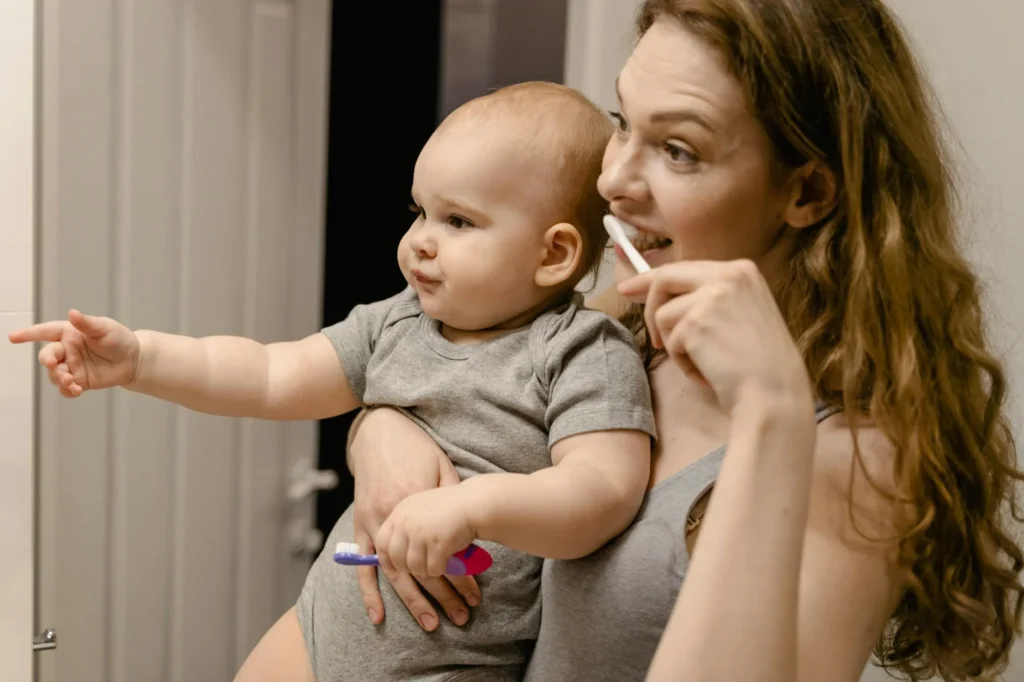
- Be a role model: Let your baby watch you brush your own teeth. Kids learn by imitation.
- Make it a game: Sing a silly toothbrushing song, make funny sounds, or play ‘copycat’ with brushing motions.
- Let them explore: Give your baby their own soft baby toothbrush (without toothpaste) to chew on and play with during bath time or play time. This helps them get used to the feeling.
- Start small: Don’t expect a full, thorough brushing right away. Aim for a few seconds at first, gradually increasing the time as they get more comfortable.
- Choose the right time: Try brushing when your baby is generally happy and alert, not when they’re overtired or hungry.
- Positive reinforcement: Shower them with praise and smiles after even a short brushing session.
- Use a mirror: Let them watch themselves in the mirror while you gently brush. Many babies find this fascinating.
- Positioning: Try different positions. Some parents find success with the baby lying on their back in their lap, while others prefer standing in front of a mirror.
Gentle and Consistent
If your baby resists, don’t force it. Take a break and try again later. Consistency is more important than perfection in these early stages. Aim to brush at least once a day, ideally after their last feed before bed, and if possible, again in the morning.
When to See a Dentist
The American Academy of Pediatric Dentistry recommends a baby’s first dental visit by their first birthday, or within six months of the first tooth erupting. This early visit helps establish a dental home and allows the dentist to check for any issues and provide guidance on oral care.

Frequently Asked Questions
What if my baby cries every time I try to brush their teeth?
It’s common for babies to resist. Keep trying different approaches – songs, games, trying at different times, letting them watch you first. If they cry, try to stay calm and make it as quick and gentle as possible. Sometimes just making it a part of the routine, even if they fuss, will eventually lead to acceptance.
Do I really need to use fluoride toothpaste for a baby?
Yes, pediatric dental organizations now recommend using a tiny smear of fluoride toothpaste from the eruption of the first tooth. Fluoride helps protect against cavities, even in baby teeth. Always use a very small amount and supervise your baby.
Disclaimer: This information is for general guidance only and is not a substitute for professional medical advice. Always consult with your pediatrician or other qualified healthcare provider for any questions regarding your baby’s health or before making any decisions related to their care. If you have concerns about your baby’s development or health, please contact a healthcare professional immediately.
Note: Totals vary by provider, region, and part quality.
Images sourced from Pexels.