
What’s Happening with Your 6-Week-Old?
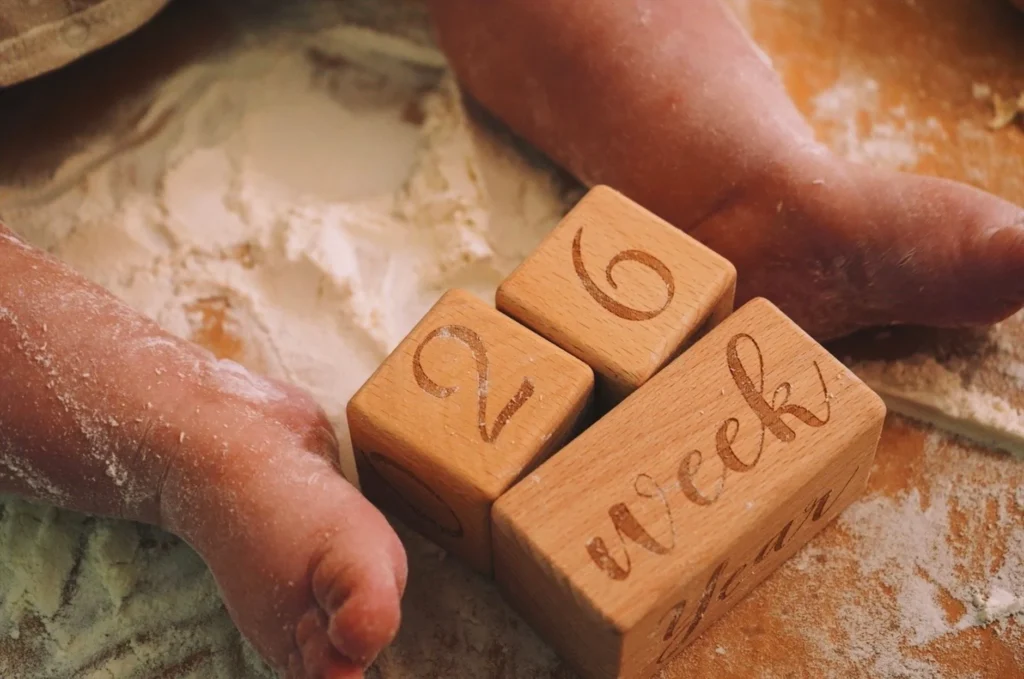
Six weeks is a significant milestone! Your baby is becoming more aware of the world around them. You might notice they’re more alert for longer periods, taking in faces and sounds. Their reflexes are still strong, but purposeful movements are slowly starting to emerge. Those first real social smiles might even make an appearance, lighting up your day!
Head control is improving, so they might be able to briefly lift their head during tummy time. Their eyesight is still developing, focusing best on objects about 8-12 inches away, and they often enjoy high-contrast patterns. They’re also getting better at recognizing your voice and responding to it with coos or by turning their head.

Disclaimer: This information is for general educational purposes only and is not intended to be a substitute for professional medical advice, diagnosis, or treatment. Always seek the advice of your pediatrician or other qualified health provider with any questions you may have regarding your baby’s health or a medical condition.

Developmental Milestones to Look For:
- Starting to smile socially
- Briefly lifting head during tummy time
- Making eye contact and following objects with their eyes
- Responding to loud sounds
- Making cooing sounds
- Stronger sucking reflex
Sleep at 6 Weeks
Sleep at six weeks can still feel unpredictable. Your baby is likely sleeping in short bursts throughout the day and night, typically totaling 14-17 hours over 24 hours. Some babies might start to have one slightly longer stretch of sleep at night, perhaps 4-5 hours, giving parents a much-needed break. It’s still very normal for them to wake frequently for feedings.

Creating a consistent bedtime routine, even a simple one, can be helpful. A warm bath, a gentle massage, dimming the lights, and a quiet feed can signal to your baby that it’s time to wind down. Remember to always place your baby on their back to sleep, in a crib or bassinet with a firm mattress, free of loose bedding, bumpers, or toys.
Feeding Your 6-Week-Old
Whether you’re breastfeeding or formula feeding, your 6-week-old will still be feeding on demand. This means feeding whenever they show signs of hunger, such as rooting, sucking on their fists, or fussing. Typically, this can be every 2-4 hours, though every baby is different.
For breastfeeding parents, this period can sometimes be associated with a ‘growth spurt,’ leading to more frequent feeds. Trust your baby’s cues. Signs of adequate feeding include at least 6-8 wet diapers and 3-4 dirty diapers a day (fewer for formula-fed babies once regular bowel movements establish), and steady weight gain.
Play & Development
Even at six weeks, play is crucial for development. Engage with your baby by talking, singing, and reading aloud. They love to hear your voice! Simple activities can stimulate their senses:
- Tummy Time: Short, supervised sessions on their tummy help strengthen their neck and shoulder muscles. Start with just a minute or two, several times a day.
- Visual Stimulation: Hold high-contrast black and white cards or toys about 8-12 inches from their face. Their developing eyes are fascinated by these patterns.
- Mirror Play: Let them look at themselves in a baby-safe mirror. They might not realize it’s them, but they’ll be intrigued by the movement and reflection.
- Gentle Touch: Cuddles, gentle rocking, and skin-to-skin contact are wonderful for bonding and sensory development.
Practical Tips for Parents
- Embrace the Cuddles: This fleeting newborn stage is full of precious moments. Soak them in!
- Prioritize Rest: Sleep when your baby sleeps, if possible. Even short naps can make a big difference.
- Ask for Help: Don’t hesitate to lean on your partner, family, or friends for support with chores, meals, or just a listening ear.
- Trust Your Instincts: You know your baby best. If something feels off, always contact your pediatrician.
Quick Questions
How much should a 6-week-old baby eat?
Feeding is still on demand at this age. Breastfed babies will nurse frequently, while formula-fed babies typically take around 3-5 ounces per feeding, 6-8 times a day. Look for signs of hunger and satiety rather than exact measurements.
Is a 6-week-old supposed to smile?
Yes, many babies start to show their first social smiles around 6 weeks. These are intentional smiles in response to your voice or face, not just reflex smiles.
When should I be concerned about my baby’s development?
If you notice persistent concerns such as a lack of response to sounds, no eye contact, very poor head control, or extreme fussiness that can’t be soothed, it’s always best to discuss these with your pediatrician. Early intervention is key if there are any developmental delays.
Images sourced from Pexels.