
Keeping Tabs: Why a Thermometer is Essential
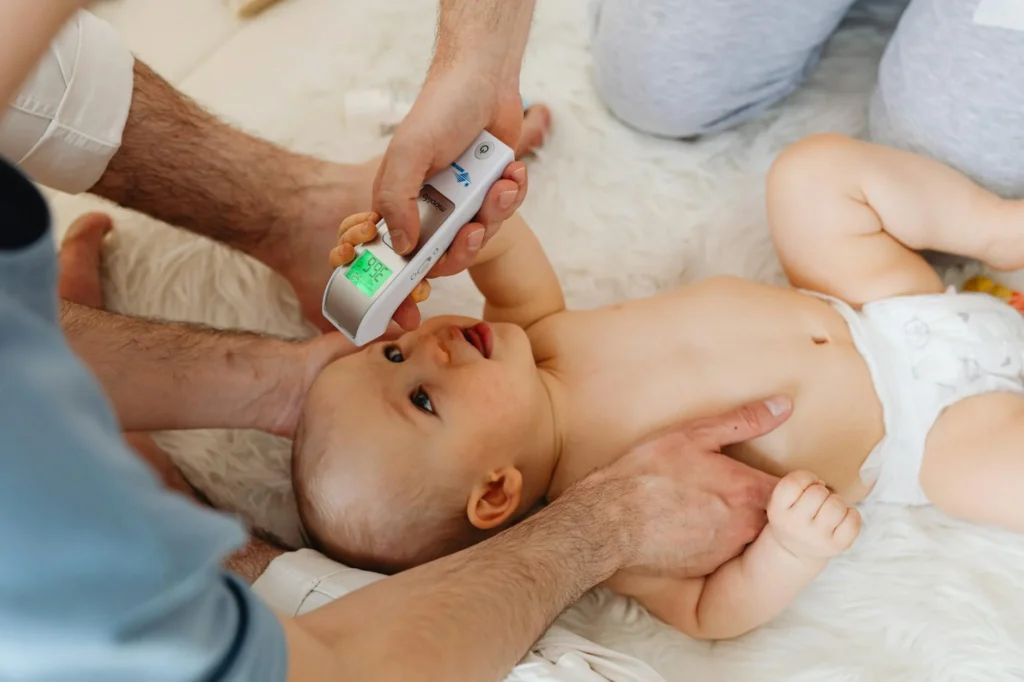
As a parent, a baby’s health is always top of mind. Having an accurate thermometer at home is a vital tool, helping you monitor your little one’s temperature if they feel unwell. It provides important information to share with your healthcare provider, giving you peace of mind.
Who These Thermometers Help
This guide is for anyone caring for infants, toddlers, or young children. Understanding the different types of thermometers available helps parents make an informed choice, ensuring they have the right tool to accurately check their child’s temperature when needed. From newborns to energetic preschoolers, knowing which thermometer to use can make a big difference.

Understanding Your Options: Thermometer Types
Choosing a thermometer can feel a little overwhelming with so many types out there. Let’s break down the most common ones you’ll encounter and who they’re best suited for.

Rectal Thermometers
Often considered the gold standard for accuracy in infants and young children, especially those under three months. A digital rectal thermometer provides a very precise reading of core body temperature. While it might feel a little intrusive, it’s a reliable method when accuracy is crucial.
- Pros: Most accurate for newborns and infants.
- Cons: Invasive, requires careful technique, can be uncomfortable for baby.
Armpit (Axillary) Thermometers
An armpit reading is a convenient, non-invasive method often used for screening purposes, especially in older babies and toddlers. While easy to do, it’s generally considered less accurate than a rectal temperature and might not reflect core body temperature as precisely.
- Pros: Non-invasive, easy to use, comfortable for baby.
- Cons: Less accurate than rectal or oral readings.
Oral Thermometers
These are suitable for older children who can hold the thermometer securely under their tongue for the required time. Generally, this means children aged around four or five years and up. It’s not appropriate for infants or toddlers due to safety concerns and difficulty in getting an accurate reading.
- Pros: Accurate for older children, non-invasive compared to rectal.
- Cons: Not for infants or toddlers, requires child cooperation.
Forehead (Temporal Artery) Thermometers
Forehead thermometers use infrared technology to measure the temperature of the temporal artery on the forehead. They are quick, non-invasive, and often great for squirmy babies or during sleep. While convenient, their accuracy can sometimes be influenced by external factors like sweat or drafts.
- Pros: Very fast, non-invasive, can be used while baby sleeps.
- Cons: Can be less accurate than rectal, sensitive to technique and environment.
Ear (Tympanic) Thermometers
These thermometers measure the infrared heat from the eardrum. They provide quick readings but require proper placement in the ear canal to be accurate. Ear thermometers are generally recommended for babies six months and older, as the ear canal of younger infants is too small for a reliable reading.
- Pros: Very fast, relatively non-invasive.
- Cons: Not recommended for newborns/young infants, requires correct positioning for accuracy, earwax can affect readings.
Smart/Digital Multi-use Thermometers
Many modern digital thermometers can be used for multiple sites (oral, rectal, axillary). Some ‘smart’ versions even connect to apps, allowing you to track temperature readings over time, which can be helpful for monitoring illness trends. Always check the specific capabilities and accuracy claims for each model.
- Pros: Versatile, digital display, some offer tracking features.
- Cons: Accuracy depends on the measurement site and technique.
Key Considerations for Selection
When choosing a thermometer, think about your child’s age, how comfortable you feel with different methods, and what level of accuracy you need. For newborns and very young infants, a rectal thermometer is usually recommended for the most precise readings. For quick screenings or older children, a forehead or armpit option might be more practical. Always prioritize thermometers designed for infant use, ensuring they are mercury-free for safety.
Safety Checklist for Using Thermometers
- Always choose a thermometer specifically designed for infants and children, and ensure it is mercury-free.
- Read the manufacturer’s instructions carefully before the first use.
- Clean the thermometer thoroughly before and after each use according to the cleaning instructions.
- Never leave a baby or young child unattended while taking their temperature, especially with rectal or oral thermometers.
- Store thermometers safely out of reach of children.
Care and Cleaning for Longevity
Proper care keeps your thermometer working accurately and hygienically. Most digital thermometers can be cleaned with rubbing alcohol on a cotton ball or swab, or with soap and cool water. Always check the specific cleaning instructions for your model, as some parts may not be waterproof. Store it in its protective case, away from extreme temperatures, and remember to replace batteries when the low battery indicator appears to ensure it’s ready when you need it most.

Frequently Asked Questions About Baby Thermometers
Which thermometer type is best for a newborn?
For newborns and infants under three months, a digital rectal thermometer is generally recommended by pediatricians for the most accurate reading of core body temperature.
Can I use an adult thermometer for my baby?
While some digital thermometers are multi-purpose, it’s always best to use one specifically designed for infants and children. These are often sized for comfort and safety, and ensure they are mercury-free.
When should I contact a healthcare professional about my baby’s fever?
Always contact your healthcare professional if your baby is under three months old and has a fever. For older babies and children, seek advice if the fever is very high, lasts for an extended period, or if your child seems unusually irritable, lethargic, has difficulty breathing, develops a rash, or shows any other concerning symptoms. Trust your parental instincts.
Important Health Disclaimer
The information provided in this guide is for general informational purposes only and does not constitute medical advice. It is not a substitute for professional medical advice, diagnosis, or treatment. Always seek the advice of your healthcare professional or other qualified health provider with any questions you may have regarding a medical condition or before making any decisions related to your health or the health of your child.
Note: Totals vary by provider, region, and part quality.
Images sourced from Pexels.