
Bringing a baby home is a joyous, exciting time. Soon enough, that little one will be crawling, cruising, and exploring every corner of your home. Creating a safe environment isn’t about stifling their curiosity, but rather giving them the freedom to discover within secure boundaries. A proactive approach to baby-proofing helps prevent accidents before they happen.
Remember, this information is for general guidance only and should not be considered medical advice. Always consult with a healthcare professional for specific health concerns.

The Nursery
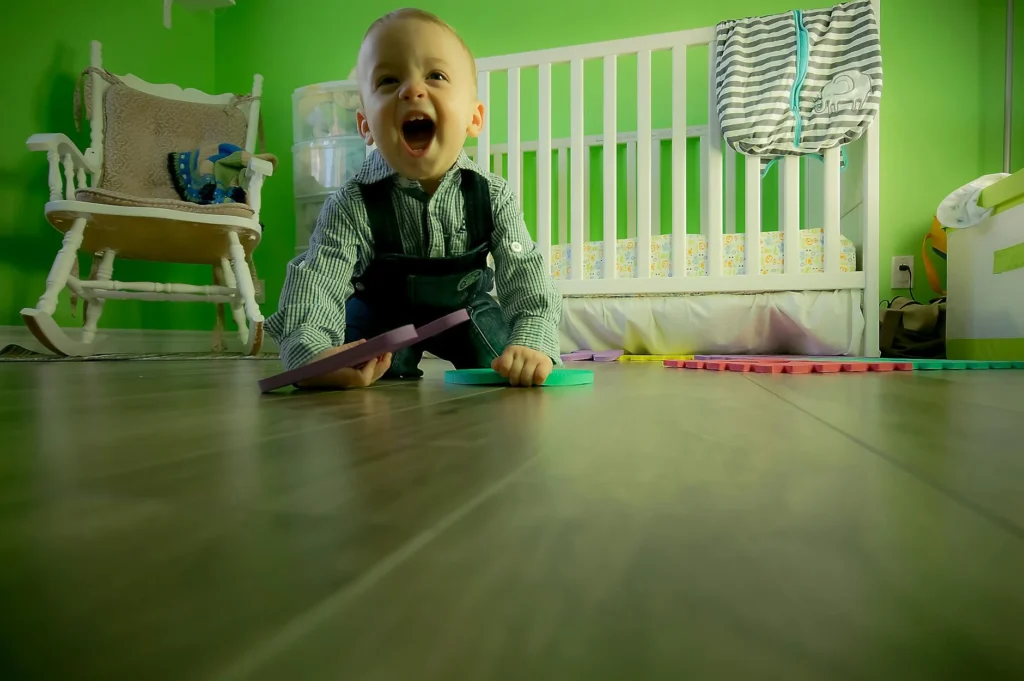
This is often where your baby spends a lot of time, even when you’re not in the room. Safety here is paramount.
Crib & Sleep Space
- Ensure crib slats are no more than 2 3/8 inches apart (about the width of a soda can).
- Remove all pillows, blankets, bumpers, and stuffed animals from the crib until your baby is at least 12 months old. A firm mattress with a fitted sheet is all that’s needed.
- Position the crib away from windows, cords, and decorative wall hangings.
Furniture & Walls
- Anchor all dressers, bookshelves, and changing tables to the wall using furniture straps. Little climbers can easily pull these over.
- Keep changing supplies (diapers, wipes, creams) within arm’s reach while keeping one hand on your baby at all times.
Windows & Outlets
- Install cordless window coverings or use cord shorteners for blinds. Dangling cords are a serious strangulation hazard.
- Cover all electrical outlets with tamper-resistant caps or sliding covers.
Living Room & Play Areas
These are high-traffic areas where exploration often begins.
Furniture & Electronics
- Pad sharp corners and edges of coffee tables, hearths, and other low furniture.
- Secure TVs to the wall or furniture with safety straps.
- Keep remote controls, small batteries, and other choking hazards out of reach.
Cords & Outlets
- Bundle and secure all electrical cords for lamps, TVs, and other electronics. Avoid leaving them dangling where babies can pull on them.
- Again, cover all accessible electrical outlets.
Small Objects & Choking Hazards
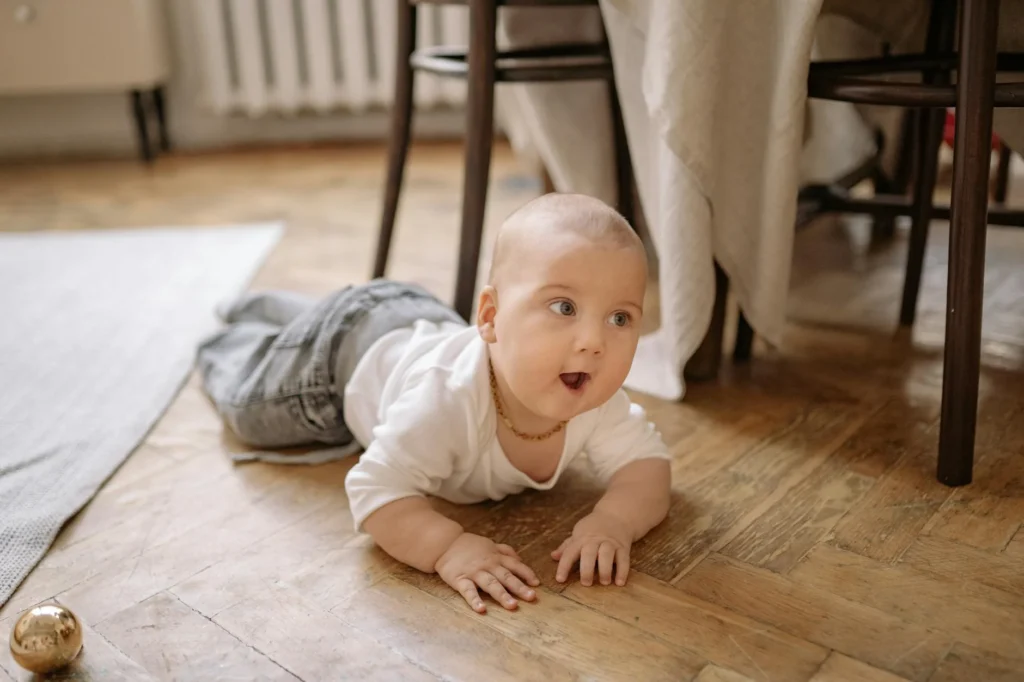
- Get down on your hands and knees to see the room from your baby’s perspective. Scan for any small items like coins, buttons, pet food, or small toy parts that could be swallowed.
- Store houseplants out of reach; some can be toxic.
The Kitchen
Full of fascinating — and dangerous — objects for a curious baby.

Cabinets & Drawers
- Install childproof latches on all cabinets and drawers, especially those containing cleaning supplies, sharp objects, glass, or heavy pots.
- Consider a magnetic locking system for a more discreet option.
Appliances & Hot Zones
- Use oven and stove knob covers, and a stove guard to prevent tiny hands from touching hot surfaces or turning on burners.
- Keep dishwashers closed and locked, and avoid running them when your child is present.
- Unplug toasters and other small appliances when not in use.
Cleaning Supplies
- Store all cleaning products, detergents, and chemicals in high, locked cabinets. Never leave them on the floor or under the sink, even for a moment.
The Bathroom
Often overlooked, but full of potential hazards.
Water Safety
- Never leave a baby unsupervised near water, even for a second.
- Install a toilet lock to prevent little ones from playing in the water or accessing cleaning tablets.
- Set your water heater thermostat to no higher than 120°F (49°C) to prevent scalding.
Medications & Products
- Keep all medications (prescription and over-the-counter), vitamins, and personal care products (shampoos, lotions, mouthwash) in a locked cabinet, well out of reach.
- Discard expired medications safely.
Toilet & Trash
- Keep the toilet lid down and secured with a child lock.
- Use a trash can with a secure lid to prevent access to potentially dangerous items.
Hallways & Stairs
Pathways to adventure, but also potential tumbles.
Gates & Railings
- Install sturdy, hardware-mounted safety gates at the top and bottom of all staircases. Pressure-mounted gates are not recommended for the top of stairs.
- Ensure banister openings are not wide enough for a baby’s head to fit through.
Clear Pathways
- Keep hallways clear of clutter, rugs that can bunch up, or anything that could be a tripping hazard for a crawling or walking baby (or a parent carrying one!).
Beyond the Basics: General Tips
Get Down on Their Level
The best way to identify potential hazards is to see your home from your baby’s point of view. Crawl around and look for anything that could be pulled, grabbed, or swallowed.
Continuous Check-ups
Baby-proofing isn’t a one-time task. As your child grows and develops new skills, new hazards emerge. Regularly reassess your home’s safety measures.
Professional Help
If you’re unsure about installing gates or anchoring furniture, consider hiring a professional. Their expertise can offer peace of mind.
Creating a safe home environment allows your baby to explore and learn with confidence, fostering their development in a secure space. It’s an ongoing process, but one that is absolutely worth the effort for your little adventurer.
Note: Totals vary by provider, region, and part quality.
Images sourced from Pexels.